Showing posts with label book review. Show all posts

Sunday, 10 April 2016

Snobby Little Me reads the Fault in Our Stars (Finally)

Artwork courtesy of le boif, check out his Instagram
@mrgeraghty to see more of his mad skillz
After a brand new copy of The Fault in Our Stars lay undisturbed on my bookshelf for the guts of, say, 2 years, I finally admitted to myself that I would never, voluntarily, pick it up merely to satisfy my curiosity as to what all the fuss was about. After all, YA (young adult) fiction is far from my comfort zone, and I'm ashamed to admit I always thought it below me - less stimulating, less challenging, compared to my beloved classics. Even apart from that, it's popular literature after all, about a teenager with Cancer who falls in love for goodness sake - seemingly so cliché. The usual PS: I Love you/The Notebook style 'tear-jerker'. Bleh.

Our paths were fated to cross eventually however, The other day, whilst going through the lengthy process of cleaning my room, the thought of listening to an audiobook occurred to me (as I haven't gotten quite so good at reading that I can do it without looking yet). However, I would never settle for just listening to a book I'm actually excited to read (because it feels impersonal and, frankly, like cheating), I decided to stick on a YouTube video of a lassie reading the first chapter of The Fault in Our Stars - just for curiosity's sake, and to make the time drag by a little faster.

I spent the first little while marvelling at what a fantastic idea it was, and how much of the story I was absorbing, unconsciously, without any effort whatsoever, while the boredom was stowed safely away. A few minutes in, I actually found myself smiling at a few of the witty remarks made by Hazel (the protagonist, and narrator). I slowly developed a slight interest in the characters, but mostly, a new-found, wholly unexpected respect for the author, John Green. It impressed me that he could write on behalf of the teenagers of today, without being condescending, tiptoeing around taboos, or being too annoyingly teenager cringe-y. But as my tidying task was nearing its end for the evening, and chapter 3 was brought to a close, I was quite happy to put an end to the whole thing, and dismiss it as quite an entertaining teenage book. As in, entertaining for, y'know, YA.

A Fault in Our Stars-esque pic of  what appears to be
 a cloud producing factory. 
That night I snobbily returned to my usual sort of book, but found my mood to clash drastically with it. I entered into diagnosis mode and prescribed myself a comfort book. On the journal to grab one of my Fifty Shades books (blatantly unashamed), I caught a glimpse of The Fault in Our Stars... I grabbed both and settled back into bed. Faced with my heavy decision, I decided that I had over-indulged my beloved Fifty a tad too much, what with the new Grey book, the movie, etc. So I gave The Fault in Our Stars a test-drive. And then I kept reading. And kept reading... Before I knew it I was reading late into the night (a thing my brain rarely lets me do with classics after midnight). It was entertaining, I won't deny. Entertaining enough to make the hours whir by and for a lie in to be needed to recover.

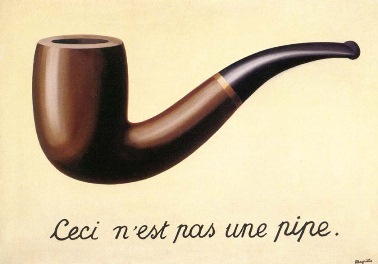
With a plot twist I saw miles ahead, a rather cute life goal, and some complex ideologies about death and the universe, I softened to the genre. They even stuck in a ceci n'est pas une pipe reference - major brownie points. Hazel is intelligent, if a little self-sacrificing for my liking; meanwhile Augustus is charming, open and very boyfriend-material-y. Hell, I even started rooting for the young lovers.
Did I shed any tears? Well, no. But I did well up at one point if that counts. Green called to mind the closeness you can have with one particular person (whether it's le boif, le girlf or le bff). A connection you share only with them. You tell them everything, they become an integral part of your life, and then - they're gone. And in their place - well, nothing. Your own private interactive diary, missing. The one person you share all your hopes, fears, and secrets with isn't around when you face your biggest plunge - to paraphrase Green - the scar they've left behind for you to bear.  The only person you want to talk to about how you feel can't indulge you. The thought of that raw loneliness in an encouragement to all the rest of us to cling to those we care about and relish what time we have with them.

So while I may not have broken down in tears whilst reading Green's best-seller, I did get something from it. Namely, I got that same childish glee, the reading frenzy feeling that I haven't felt in years. More importantly it was a little reminder to me to appreciate those closest to us. Because an infinity of time with the one you love is never enough, and one day that infinity will come to an end, and the two are forced to part.

I also learned a valuable lesson: don't judge a book by its genre.

One word review: surprising
Star rating: 3/5

Monday, 13 April 2015

Book Review 3: The Time Machine

The Time Machine, by HG Wells, is worlds apart from my usual read (I'm not a sci-fi kinda gal) but it was a nice little breather from the heavy reads I so love. Why, Silly Little Lady, what on earth made you choose such a book? I hear you ask. Well, my lovely inquisitive audience, I'll tell you why. One Christmas many moons ago, an even littler Silly Little Lady strayed away from her crowd of festive relatives in order to fetch something or other. She happened to glance at the TV, and found herself lost in the most enchanting tale of Eloi and Morlocks and the ever lovely Weena. She could hardly tear her eyes away from the Time Traveller's antics, and lost most of the afternoon engrossed, while her family was nearly about to file a missing persons ad. I do believe that a story that can tear a child away from her brand-spanking-new Santy presents on Christmas morning is one worth taking a little time to get to know. That, and I had a 'book set in the future' box just begging to be ticked off on my 2015 Book Challenge.

The Time Machine is simply about a unnamed time traveller (unless Time Traveller was a popular English name in the late 1800s) who begins to tell his sceptical acquaintances (can you blame them?) all about his awe-inspiring experiences in the year 802,701.

As a piece of literature, this is pretty basic. The writing style is simplistic, the characters undeveloped, but it's the plot that saves this classic. It's this novel that is alleged to have made the idea of time travel popular, and Wells even considers some interesting philosophies about future civilisations, and muses the purpose of intellect in nature: "It is a law of nature we overlook, that intellectual versatility is the compensation for change, danger, and trouble. An animal perfectly in harmony with its environment is a perfect mechanism. Nature never appeals to intelligence until habit and instinct are useless. There is no intelligence where there is no change and no need of change." It's thought-provoking ideas like this that many futuristic novels and movies today lack, and instead stick to the tried and tested. Y'see, time travel, I can take it or leave it, but when you turn time travel into a hypothesis of the future of humanity, count me in.

Overall, I did enjoy this novel, as silly and little as it is. As far as recommendations go, if you're looking for a nice little 2 hour read that'll give you a short break from tragedies and tearjerkers, and don't mind a kids book type read, go ahead and give The Time Machine a go.

Friday, 10 April 2015

Book Review 2: Tess of the d'Urbervilles

Book 2 of 50 ladies and gentlemen, and one I've been dying to read for quite some time now. Tess of the d'Urbervilles is by an English writer, Thomas Hardy, who was around in the 1800s. He's one of the greats, and he ticks off the 'book by an author you've never read before' box for me on my book challenge. Tess of the d'Urbervilles was quite unlike anything I've ever read before and has immediately become one of my favourite books of all time, if not my favourite book of all time (The Picture of Dorian Gray is pretty hard to top). The book is about a young lady by the name of Tess Durbeyfield, who lives in rural England, with her poor family who dabbles in agriculture. Mr Durbeyfield discovers that he is a direct descendant in a line of wealthy noblemen, the d'Urbervilles, and from this discovery, Tess's life and future is completely altered.

One of the first things I noticed about Thomas Hardy's writing style, was his ability to romanticise any seemingly mundane sight into such beauty and delicacy. An example of one such description was that of the deceptively simple shadows of cattle, "Thus it threw shadows of these obscure and homely figures every evening with as much care over each contour as if it had been the profile of a court beauty on a palace wall; copied them as diligently as it had copied Olympian shapes on marble façades long ago, or the outline of Alexander, Caesar, and the Pharaohs." To make such an observation, hinting at nature's neutrality, and suggest that in essence something so powerful as the sun should treat a cow with as much respect as it would a Pharaoh, is so inspiring and enlightening, and I praise Hardy highly for it.

Hardy's descriptions of nature and the sun, also seem to create a gap between his description and reality, the former seeing somehow embellished. It opened my eyes to the beauty around me. I was inspired to wake before dawn and witness what Hardy describes so vividly, yet somehow the muse doesn't compare to the artist's interpretation, "In the twilight of the morning, light seems active, darkness passive; in the twilight of evening it is the darkness which is active and crescent, and the light which is the drowsy reverse."

It is not only his descriptions of nature which appear to embellish reality, however. Hardy managed to add more beauty, wonder and character to that which is thought to be perfect and unparalleled: love and passion. On seeing "the desire of his eyes"  Clare cannot control himself and simply has to give passion its way and hold her in his arms, "Resolutions, reticences, prudences, fears, fell back like a defeated battalion." Looking at Tess through Clare's eyes: the women who has stolen his heart, was such a thrilling experience, and one so rare. It made me wonder about the extent of today's men's love and desire, which appear to dull in comparison to how Hardy envisions them, and begs the question: are their hearts lacking or merely their tongues? Do men feel this same level of passion, desire and love that Hardy did? Down through the ages women have maintained their interest in love, it's easy to see how much we hunger for it by merely taking a look around a bookshop or a DVD shop and seeing all the romances, but when did men stop writing about love? Did they stop feeling it the way we do?

Hardy does address the idea that time will bring a loss of feeling and emotion, echoing my musing that men in today's society may not feel love in the same extremity, or perhaps it has adapted. In the line "It was probable that, in the lapse of ages, improved systems of moral and intellectual training would appreciably, perhaps considerably, elevate the involuntary and even the unconscious instincts of human nature."  I am reminded of HG Wells' futuristic society in The Time Machine, which I shall be reviewing next.

On the final note of Hardy's philosophising, I particularly enjoyed his touching on the idea of a contained universe and personal reality: "The universe itself only came into being for Tess on the particular day in the particular year in which she was born."  This emphasises Tess's tendency not to over-analyse or muse about the abstract, and reinforces her character as a homely, stubbornly simple country girl, who desires to be nothing more.

Tess of the d'Urbervilles touches on the hypocrisy of men in society, and their demeaning, belittling attitude towards women, and women's pitiful devotion to their male counterparts. Tess takes on the role of a self-sacrificing, self-loathing woman, stereotypical of her era. Hardy portrays Tess as both an embarrassment to the female sex, and yet one so lovable. He paints a picture of a woman severely lacking self respect and perspective as the main character in his novel, yet I do not feel offended, as I often do when a man tries to use a female protagonist (often without success). This to me is a unique talent of Hardy's, and one that I do not myself pretend to fathom, but can appreciate its brilliance.

In relation to his characters, Hardy makes them alive with faults. Tess lacks pride and self respect, while Clare lacks compassion and has a narrow-minded, hypocritical mindset, typical of the time. Faults in general make a character human, but these faults are so drastic, that it makes the characters seem dramatically more human than we are today. Perhaps this is why this novel is so successfully tragic. It is so bittersweet and heart-wrenching, yet somehow I am left with a sense of peace, amongst all the warped justice.

What more can I say but: read it. Just read it, and reread it if you have some more time on your hands. I can praise Hardy no more; instead I sit, and bask in his brilliance.


Wednesday, 4 March 2015

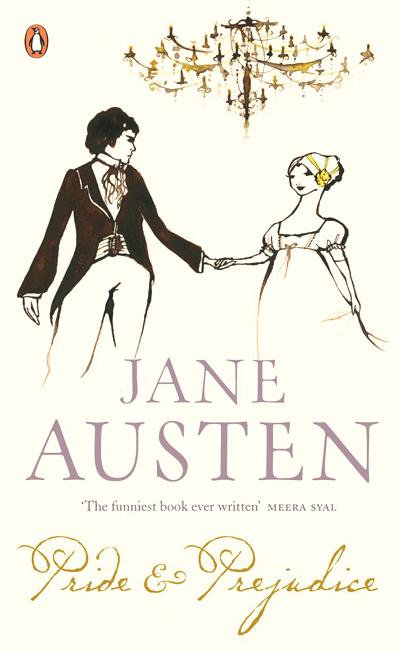
Book Review 1, A Classic Romance: Pride and Prejudice

Cliché, I'll admit, but having neglected my duty as an avid reader of frequenting the classics, I thought I best begin my reading challenge by catching up on my fellow bookworms.

To start with, Pride and Prejudice by the ever lovely Jane Austen may follow a quite predictable pattern, but one must remember that this isn't just another rom com following the herd. Austen paved the way for all those terrible rom coms we love today, and therefore any claims of the plot being old hat and unoriginal are, in my humble opinion, mistaken. Also, personally, I was still kept at the edge of my seat in certain parts of the novel, even though I called the ending after reading the first chapter (and as usual, I called it correctly).

The plot centres around Elizabeth Bennet, a sensible young lady from a unique family, to say the least. Elizabeth's sisters are a bit off the wall, all apart from Jane. Her mother is a character and a half, who strives to get each and every one of her daughters married off to eligible, wealthy young men as fast as possible, while Mr Bennet is content watching all their schemes unfold. Elizabeth hates Mr Darcy from the first time she encounters him, and finds him arrogant, proud and prejudiced. Darcy's feelings towards Elizabeth are slightly more complex... The real question of the novel is: who is proud and who is prejudiced?

Characters, to me, make or break a book, and I can't fault Austen one bit in her personalities. Elizabeth, as a protagonist is sensible, responsible and warm, and life through her eyes is easy to accept and grow to love. At times I grew frustrated with little Lizzie, but that's the nature of romance, and I suppose it wouldn't all seem so obvious if we weren't passively observing the events unfold. Mr Darcy, was however my favourite character in this novel. Even through Lizzie's hatred I found a fondness for him, and his uniqueness was apparent from the outset. Ever composed, ever superior, Mr Darcy brought a touch of class to a world so full of desperation and coveting.

Along the journey that is this novel, I encountered many more an intriguing character, and although Austen did not succeed in making me "LOL", I did have some silent giggles to myself at Lizzie's cheeky wit, and found myself seriously fangirling over and crushing on highly eligible bachelors at several points in the novel. While the concept of personal gain, greed, envy and ambition taint this tale ever so slightly, there is so much sincere love and warmth at its heart that one can't help but look upon it with tender fond feelings. It's definitely one of the few read-ten-times-over books you encounter in your book-ish travels, and if you haven't read it yet, get with the programme.

Embrace the rom com classic, and find out for yourself where Bridget Jones' Diary stole its plot...